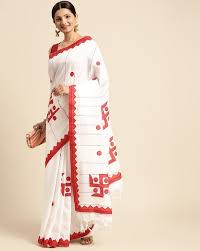
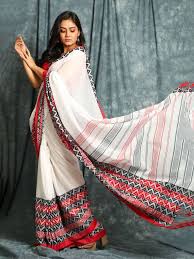
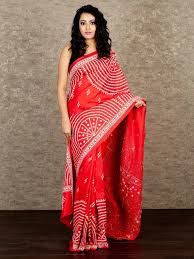
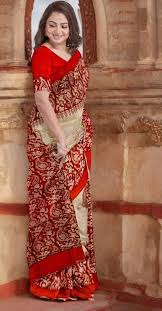
Khesh sarees are made from strips of old sarees that are woven together to form the weft, giving them a distinctive, textured look. They are typically thick and are known for their rustic and multi-colored appearance.
From the town of Begampur, these sarees are known for their soft, lightweight, and breathable fabric. They often have a fine, crisp texture and are woven with simple, elegant designs, including checks and stripes, making them perfect for daily and casual wear.
The beauty of a Kantha saree lies in its intricate hand embroidery, created using a running stitch to depict motifs of daily life, folk tales, and nature. The embroidery adds texture and storytelling to the simple cotton canvas.
Named after the city of Murshidabad, this type of silk saree is known for its softness and glossy finish. These sarees are lightweight and feature beautiful prints, often including geometric and floral designs. They are a more modern and versatile alternative to heavier silk sarees.
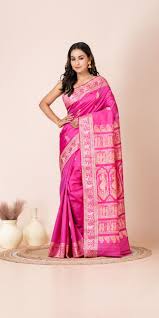
A silk saree with a history of storytelling, the Baluchari is renowned for its elaborate and detailed pallu and borders that depict scenes from Hindu epics like the Ramayana and Mahabharata, as well as courtly life.
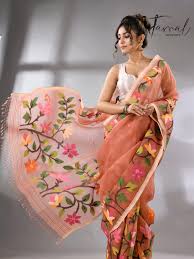
It is one of the most labor-intensive handloom products. The motifs, often floral or geometric, are woven directly onto the fabric using a supplementary weft technique. Dhakai Jamdani, a subtype, is particularly famous for its fine craftsmanship.
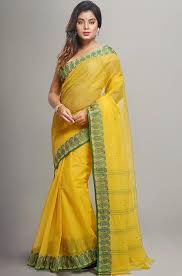
The Tant saree is a quintessential Bengali handloom cotton saree, known for its light, airy texture and affordability. It is perfect for the hot and humid climate of Bengal. Tant sarees are distinguished by their crisp texture, thick, decorative borders, and a wide variety of motifs like paisleys, flowers, and geometric patterns.